
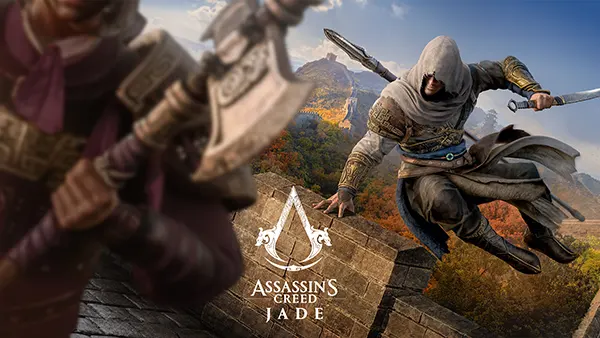
Assassin’s Creed Jade is one of Ubisoft’s most ambitious mobile projects to date, aiming to bring a full-scale open-world experience to smartphones. Unlike earlier mobile entries in the series, this title is built with the intention of delivering gameplay depth closer to console versions. As of 2026, the game remains in development, but several beta tests and official updates have already revealed a substantial amount of detail about its mechanics, setting, and overall direction.
The game is set in ancient China during the Qin dynasty, around the third century BCE. This period is significant as it marks the unification of China under Emperor Qin Shi Huang. Ubisoft has chosen this era to explore a setting that has rarely been featured in the Assassin’s Creed series, offering new cultural and architectural environments.
Players take on the role of a customisable protagonist, which is a notable shift from previous titles where characters were predefined. This approach allows for more personal storytelling and character progression, aligning with modern RPG design trends. The narrative focuses on early Assassin Brotherhood activities in the region, expanding the lore beyond previously explored territories.
Early footage and beta impressions suggest that historical landmarks, including sections of the early Great Wall and imperial cities, will play a central role in exploration. Ubisoft appears to be maintaining its tradition of blending real historical elements with fictional narratives tied to the Assassin–Templar conflict.
The open world in Assassin’s Creed Jade is designed specifically for mobile devices but without significantly compromising scale. Early tests indicate a large map divided into regions, featuring cities, rural landscapes, and restricted military zones. The structure is closer to Assassin’s Creed Origins or Odyssey rather than earlier linear mobile adaptations.
Traversal mechanics include climbing, parkour, horseback riding, and possibly early naval elements, although the latter has not been fully confirmed. The controls have been adapted for touchscreens, with optional controller support for a more traditional gameplay feel.
Environmental interaction appears to be deeper than in previous mobile entries. Players can engage in stealth through tall grass, rooftops, and shadows, maintaining core gameplay elements that define the franchise.
Combat in Assassin’s Creed Jade follows a hybrid system combining action-based mechanics with RPG elements. Players can use light and heavy attacks, dodge, parry, and execute abilities tied to character progression. Early previews suggest a simplified but responsive combat system tailored for mobile performance.
Weapon variety includes swords, spears, and bows, each with distinct playstyles. Ubisoft has also introduced skill trees that allow players to specialise in stealth, combat efficiency, or exploration. This progression system mirrors modern Assassin’s Creed titles but is adapted for shorter gameplay sessions.
Stealth remains a key pillar of gameplay. Assassinations, hidden blade mechanics, and enemy awareness systems are present, ensuring that players can approach missions in multiple ways. AI behaviour has reportedly been adjusted to suit mobile gameplay pacing while still offering a reasonable level of challenge.
One of the most discussed features is full character customisation. Players can choose gender, appearance, and certain background traits. This marks a departure from traditional fixed protagonists and aligns the game more closely with RPG design standards.
Progression is tied to experience points earned through missions, exploration, and combat. Equipment upgrades and crafting systems are expected to play a role, although the extent of monetisation tied to these systems remains a topic of discussion among players.
Ubisoft has indicated that the game will balance free-to-play mechanics with meaningful progression. However, based on industry trends, optional purchases for cosmetic items or ускорение прогресса are likely to be included.
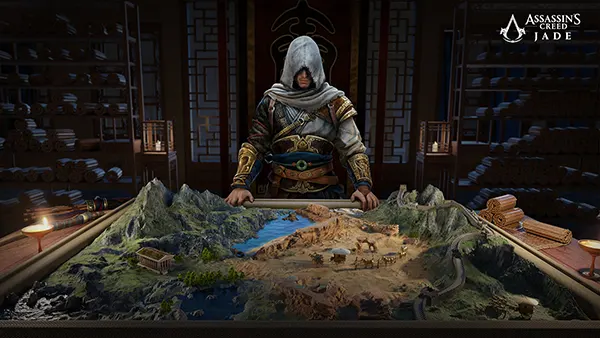
Assassin’s Creed Jade is being developed with Unreal Engine, which allows for improved graphics compared to earlier mobile titles. Beta versions already demonstrate detailed character models, dynamic lighting, and relatively large draw distances for a mobile game.
The game is planned as a free-to-play title with online connectivity. It is being developed in collaboration with Level Infinite (Tencent), which influences both distribution strategy and monetisation approach. This partnership is important, as it affects how the game is structured compared to traditional premium Assassin’s Creed releases.
As of 2026, Ubisoft has not announced a final global release date. Multiple closed beta phases have taken place in 2024 and 2025, providing valuable feedback. The current expectation is a staged release, possibly starting in selected regions before a worldwide launch.
Feedback from beta testers highlights strong visual quality and surprisingly deep gameplay for a mobile title. However, concerns remain regarding optimisation, control responsiveness, and potential monetisation balance. These are typical issues for large-scale mobile games at this stage of development.
Performance varies depending on device specifications. High-end smartphones handle the game more smoothly, while mid-range devices may experience frame drops or longer loading times. Ubisoft is reportedly working on optimisation to ensure broader accessibility.
Overall expectations remain high. If Ubisoft successfully balances performance, monetisation, and gameplay depth, Assassin’s Creed Jade could redefine what players expect from mobile action RPGs. The project reflects a broader trend in the industry, where mobile games increasingly aim to match the scope of traditional console experiences.