

Where Winds Meet heads east in October 2026, leaving the snow and machinery of Hidden Mountain for Qingzhou’s mountains and coastline. Version 2.3 is scheduled to open the new region on 15 October, followed by the island of Penglai on 29 October. For players on iOS and Android, this means more than another map: the update brings local companions, scholarly challenges, a new martial arts weapon and fresh world bosses. Here is what the developers have announced, how the features fit together and what to check before playing on a phone.
Qingzhou draws on Shandong province in eastern China, where mountains descend towards plains, river mouths and the sea. The journey begins at Mount Tai, or the Eastern Peak, one of China’s historic Five Great Mountains. Players will climb stone steps beneath pine trees, pass ancient inscriptions and encounter landmarks inspired by the South Gate to Heaven. The summit provides a view over villages, farmland, rivers and the distant shoreline. Rather than being only a scenic stop, it is intended to help travellers understand the surrounding geography and plan where to go next.
Lower down, the new region replaces remote mountain paths with busy settlements. Wellspring Town has clear spring water, brocade carp and kites overhead. Crownleek Terrace is known for fields of giant leeks, lively markets and an annual Crownleek Contest. These are small details, but they matter: the developers want villages to have recognisable habits and local traditions rather than feeling alike. On mobile, where a session might last only a few minutes, a visit to a market or a conversation with a resident could be as satisfying as reaching another major quest objective.
At the Yellow River estuary, vast flocks of birds move above the wetlands, sometimes forming a whale-like shape; players can even soar beside them. Further east is Mount Penglai, inspired by legends of immortal islands and Shandong’s scholarly heritage. Academies, enormous sage statues and the Pavilion of Tomes distinguish it from the mainland’s farming towns. The release is deliberately staggered: Eastern Peak opens on 15 October, while the mist-covered Penglai island is scheduled for 29 October. Players should not expect every announced location to be accessible immediately.
Reaching high ground is a central part of exploring Qingzhou. Summits provide views that can reveal settlements, trails and less obvious destinations without reducing the journey to a succession of map markers. There is more to find below ground, too. At the foot of Mount Tai, a Han Dynasty tomb can be explored with allies, although traps, creatures and mechanical puzzles stand in the way. Coastal conversations may lead to unexpected adventures. Players who slow down and pay attention to their surroundings should get more from the region than those who rush between story missions.
Version 2.3 also introduces the Local system. Certain residents can be befriended and invited to accompany the player, bringing useful talents to exploration. One may know a safe route through unfamiliar terrain, while another can interpret mechanisms or spot a concealed entrance. This gives village encounters a practical purpose beyond dialogue. It also means the same obstacle may have different solutions depending on who comes along. The system applies to specially designed Locals with individual abilities, rather than promising that every character in a settlement can become a companion.
The announced talents are unusually varied. A persuasive Local can use the Gift of Gab or help in Pitch-pot matches; an observant one can lead players towards hidden caves and overlooked points of interest. Athletic companions may carry travellers, dive for fish or force open a heavy door. Around them are smaller diversions such as beachcombing, kite flying and finger-guessing games, with the occasional peach dropping unexpectedly from a tree. These touches make Qingzhou feel markedly different from Hidden Mountain and give mobile players enjoyable reasons to stop between longer adventures.
Qingzhou’s friendlier atmosphere does not push fighting aside, but its new Inkbound Order sect values knowledge, art and persuasion alongside martial skill. One important feature is the chance to study as a guest scholar without leaving an existing sect. That should interest established players who have spent months developing their chosen character and do not want to discard a previous affiliation. The addition also suits the region’s theme: its scholars believe disputes can sometimes be resolved through intelligence and restraint rather than another exchange of blows.
The Inkbound Order introduces A Duel of Wits, a card-based player-versus-player contest built around verbal arguments. Instead of damaging an opponent with weapons, players use proverbs, tactics and clever responses to weaken the other side’s composure. It offers a different kind of rivalry from conventional martial arts duels. The detailed rules and rewards still need to be checked in the live release, but the premise is clear. For touchscreen players, a contest based on choices and anticipation could provide a welcome change from battles that demand rapid, precise inputs.
Academy life includes less confrontational activities as well. Players will be able to serve as Assistant Invigilators, identify examination cheats during timed challenges and take part in Farm Recess events. These diversions reflect the region’s interest in learning and everyday culture, giving visitors alternatives to story missions and world bosses. They should appeal to people who enjoy Where Winds Meet for its range of optional pastimes. The precise conditions for participation and individual rewards have not all been specified, however, so it would be premature to promise particular prizes or instant access to every event.
The new Ribbon Drum weapon combines martial arts with dance-like movement and percussion. Flowing ribbons can strike, bind and knock back opponents, while some attacks can apply silence. Its drum rhythms can also grant useful effects to teammates, making it a mixture of crowd control and group support rather than a straightforward damage weapon. The style could suit players who prefer assisting friends during difficult battles. Its effectiveness on a phone will depend partly on the final touchscreen layout and attack timing, so trying the moves first makes more sense than immediately rebuilding an entire character around them.
Three world bosses are confirmed for Qingzhou. Tidewatcher uses bamboo stilts, operatic movement and flower-spear skills. Old Raftsman fights with a strong staff style inspired by the work of guiding timber rafts along a river. Zhu Yinghan, leader of Dragonfall Camp, transforms fast shuttlecock kicking into a martial arts challenge. Their identities suggest very different encounters, rooted in local customs rather than interchangeable monster designs. Specific attack phases, damage figures and reliable tactics have not yet been established for the international release, so any detailed boss guide published before launch deserves caution.
Mobile players can prepare for these encounters by practising the fundamentals: reading an enemy’s movements, leaving room to dodge and choosing sensible moments to deflect or counterattack. This is especially useful for anyone returning after a break. Version 2.2 concluded the Hidden Mountain story and added demanding fights involving Halcyon, Goshawk and Golden Colossus Taicu. Qingzhou continues that flow of fresh challenges while giving players more peaceful activities between them. There is no need to assume that a newly announced weapon will automatically outperform a familiar, well-practised build.
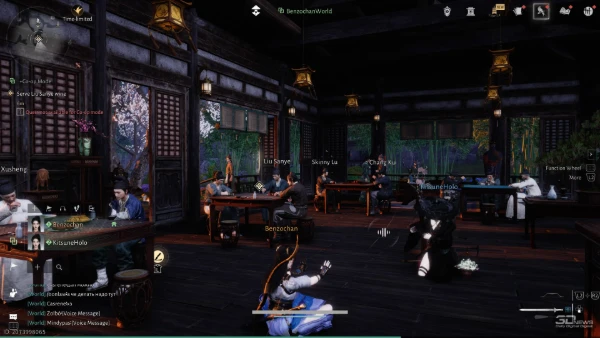
Where Winds Meet launched internationally on iOS and Android in December 2025, so Qingzhou is an update to the existing mobile game, not a separate release. The announced dates are 15 October 2026 for Eastern Peak and 29 October for Penglai. The exact availability and download window should be checked in the app for the player’s server region, rather than inferred from a date alone. Where Winds Meet remains free to play, with gameplay content available without buying an expansion. The October additions are part of that continuing game experience.
Touchscreen combat has some established differences from playing on a computer. According to the official mobile FAQ, newly created mobile characters start on Story or Recommended difficulty, with Expert available from level 30. Assist Deflection is switched on by default and can be disabled in Settings. Characters created on PC at Legend difficulty can retain that status when used on mobile. These are existing mobile arrangements, not features first introduced in Version 2.3, but they matter when deciding how to approach Qingzhou’s new battles.
Cross-play and cross-progression allow a player to move between supported phones, computers and consoles without abandoning their character. Account linking is the crucial step: anyone bringing progress from PC or console should connect the existing account before creating a new character on mobile. If both accounts already contain character data, they cannot normally be linked. Progress sharing also applies within the same server region; characters cannot simply be moved between different regions. Sorting this out before 15 October is particularly useful for anyone planning to explore Qingzhou on a phone and continue on a larger screen at home.
Storage is the first practical issue to check. Where Winds Meet is already a substantial mobile download, and new regional files may need extra temporary space during installation. Players have reported different Qingzhou pre-download sizes and storage totals, but these are individual experiences, not a universal official requirement. Check the figure shown inside your own app, leave spare capacity and use reliable Wi-Fi where possible. Review resource-management options before removing older areas, since quests and group activities may require you to download some of that content again.
Players following the story may want to finish Version 2.2 first. That update brought the Hidden Mountain arc to its conclusion, including developments at Mohist Hill and the Skyward City Ruins. Qingzhou offers a noticeably different atmosphere, so finishing the previous chapter creates a natural transition, although its exact entry requirements should be checked in-game. A sensible first route is to climb Mount Tai, scan the surrounding landscape, visit Wellspring Town and Crownleek Terrace, then head towards the estuary while meeting Locals who can help with exploration.
Several important facts are confirmed: Qingzhou’s coastal setting, the new Local companions, Inkbound Order, A Duel of Wits, Ribbon Drum, three named world bosses and the two October opening dates. Exact mobile download requirements, complete event rewards, access conditions and dependable boss strategies still need live confirmation. Official development letters and subsequent update notices remain the best sources for verifying them. Between its new combat options and unusually detailed village life, the region seems designed for players who enjoy taking their time as much as completing objectives.