
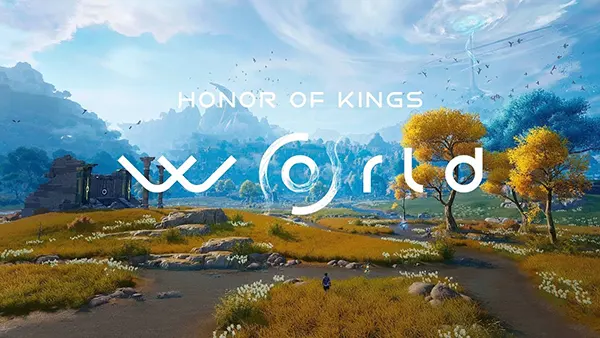
Honor of Kings: World represents one of the most ambitious attempts to expand a well-established mobile franchise into a fully realised open-world RPG. Developed by TiMi Studio Group, the project builds on the popularity of the original Honor of Kings while introducing large-scale exploration, cooperative systems, and persistent progression. As of 2026, the game continues to attract attention due to its technical scope and its attempt to merge console-level design with mobile accessibility.
The core shift in Honor of Kings: World lies in its transition from a session-based multiplayer format to a continuous open-world environment. Players are placed in expansive regions inspired by Chinese mythology, where environments are not only visually detailed but also structured to support layered exploration. Verticality plays a key role, with climbing, gliding, and traversal mechanics encouraging movement beyond flat terrain.
Unlike traditional mobile RPGs, the world is designed to feel interconnected rather than segmented into isolated zones. Players encounter dynamic events, roaming enemies, and environmental puzzles that contribute to a sense of progression beyond simple quest completion. This approach aligns more closely with open-world design seen in PC and console titles, but adapted for shorter play sessions.
Technical optimisation remains a central challenge, and by 2026 the developers have focused on scalable performance across devices. Adaptive graphics settings and streaming technologies allow the world to remain detailed without overwhelming mobile hardware, ensuring a balance between visual fidelity and accessibility.
Interaction within the world goes beyond combat encounters. Players can engage with environmental mechanics such as elemental reactions, destructible objects, and interactive structures. These systems introduce variability into exploration, making each region feel distinct rather than repetitive.
The design philosophy reflects a shift towards player-driven discovery. Instead of guiding players through linear quest chains, the game encourages wandering, experimentation, and engagement with optional content. Hidden areas, side objectives, and narrative fragments reward curiosity rather than strict adherence to a main storyline.
This approach also supports long-term engagement. By continuously updating regions and adding new areas post-launch, the developers maintain relevance while avoiding the stagnation often seen in static mobile environments.
Honor of Kings: World integrates MMO mechanics that extend beyond basic multiplayer functionality. Players share the same world space, enabling cooperative exploration, group combat encounters, and shared objectives. Unlike instanced gameplay, this structure creates a persistent environment where player activity contributes to the overall ecosystem.
Guild systems, cooperative raids, and world bosses form the backbone of social interaction. These features require coordination and strategic planning, encouraging players to engage with others rather than progressing entirely solo. Communication tools and matchmaking systems have been refined to suit mobile interfaces, making group play accessible even in shorter sessions.
Progression systems are also tied to social features. Participation in group activities often provides access to exclusive rewards, gear upgrades, and progression boosts. This design incentivises collaboration while maintaining fairness for solo players through alternative progression paths.
Character development in Honor of Kings: World combines elements of RPG customisation with hero-based mechanics from the original game. Players can switch between different characters, each with unique abilities and combat styles, while still contributing to a unified progression system.
This hybrid approach reduces the limitations of fixed classes. Instead of committing to a single role, players can adapt their playstyle depending on the situation, whether focusing on damage, support, or exploration. This flexibility is particularly valuable in cooperative content, where team composition can change dynamically.
Equipment, skill upgrades, and synergy systems further deepen progression. By 2026, updates have expanded these systems to include more nuanced builds, allowing players to experiment with combinations rather than following rigid meta strategies.
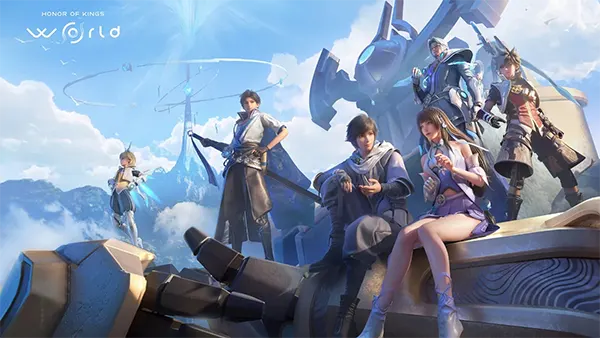
The combat system is designed to bridge the gap between action RPG mechanics and mobile controls. Real-time combat includes dodging, skill chaining, and elemental interactions, requiring timing and positioning rather than simple tap-based inputs. This increases engagement while maintaining accessibility through intuitive controls.
Enemy design plays a significant role in shaping combat encounters. Boss fights often include multiple phases, environmental hazards, and coordinated attack patterns that require awareness and adaptability. This design elevates combat beyond repetitive encounters commonly found in mobile RPGs.
From a technical perspective, latency optimisation and server stability are critical. The developers have invested in infrastructure improvements to support real-time multiplayer interactions without noticeable delays, which is essential for maintaining responsiveness in action-based gameplay.
One of the defining aspects of Honor of Kings: World is its cross-platform ambition. While primarily developed for mobile devices, the game is also expected to support PC integration, allowing for shared progression and expanded control options. This approach reflects broader industry trends towards unified gaming ecosystems.
Ongoing development focuses on content expansion, including new regions, characters, and story arcs. Regular updates are essential for maintaining player interest, particularly in a live-service model where engagement depends on consistent additions.
Looking ahead, the success of Honor of Kings: World will depend on its ability to balance accessibility with depth. If the developers continue refining technical performance and expanding gameplay systems, the project has the potential to redefine expectations for large-scale mobile RPGs.