
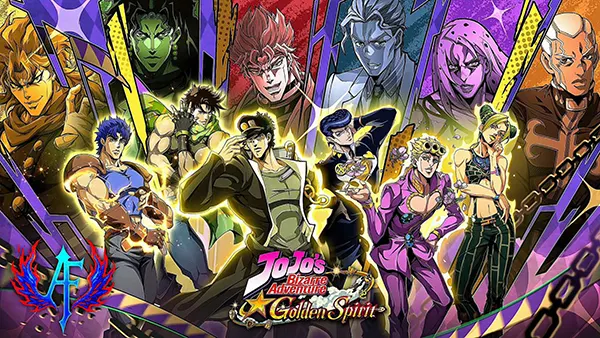
JoJo’s Bizarre Adventure: Golden Spirit is an officially licensed mobile RPG built around characters and battles from the anime series. As of 10 August 2026, the international iOS listing gives 13 August 2026 as the expected release date, while KLab has confirmed plans for a worldwide launch outside Japan. Rather than treating the series as a conventional action game, Golden Spirit uses 3D strategic card battles in which team composition, attack range, character skills and changing battle conditions matter. The current international description covers six generations from Phantom Blood through Stone Ocean, allowing Ripple users, Stand users and major supporting characters to appear in the same broader combat system. The result is designed to keep the recognisable powers of JoJo characters while making preparation and timing more important than rapid button inputs.
Golden Spirit is presented as a 3D strategy RPG, so its fights focus on arranging a capable squad and understanding how each character behaves once combat begins. Characters do not simply differ by attack strength. Their effective range, skill effects and interaction with other abilities can change which target they pressure and how safely they operate. The international game description specifically asks players to optimise different attack ranges before looking for opportunities to counterattack. This makes positioning and team balance relevant even for players who are not interested in complicated statistics. A close-range attacker may need support to reach an important enemy, while a character with better reach can influence the fight from a safer position. The basic idea is easy to follow: a strong team needs members whose strengths cover one another rather than several characters competing for the same job.
One of the named combat features is Rush. Official pre-release material describes Rush as a counterattacking opportunity that can turn the direction of a battle when used at the right moment. It fits the series because many JoJo fights are decided after a character understands an opponent’s rule, survives the first threat and responds with a better plan. Golden Spirit attempts to convert that rhythm into a team-based battle system. Rush therefore matters as more than a flashy animation: it gives the player a reason to think about when pressure is building, which character can answer it and how a squad’s abilities work together. The game still uses cinematic attacks and familiar finishing scenes, but those visual moments sit on top of a system that rewards preparation and combinations rather than treating every special move as an isolated source of damage.
The other major variable is the environment. Chinese official material describes 18 dynamic conditions, including wind, blowing sand, rain and snow, and the international listing also confirms that changing weather can influence abilities and combat. These conditions can alter how effective particular characters are instead of serving only as background effects. That means a line-up that performs well in one battle may not behave exactly the same way in another. The system is especially suitable for JoJo because many fights in the anime depend on location, temperature, visibility or an unusual physical condition. Golden Spirit uses that idea to make the battlefield part of the matchup. Players do not need to memorise every modifier immediately, but paying attention to the current environment can explain why a familiar skill suddenly has better reach, loses efficiency or creates a new tactical opening.
The developers have repeatedly described Golden Spirit around the idea of information and counters. A clear example from official Chinese material is the relationship between Ripple fighters and undead enemies: Ripple users can gain an advantage against zombies or vampires through passive effects. This is a simple rule, but it shows how the game intends to represent the logic of the source material. Jonathan Joestar and Joseph Joestar do not need Stands to remain relevant when their own fighting method has a natural purpose against certain opponents. For players, this means character knowledge can be as useful as raw upgrade levels. Choosing a suitable fighter for the enemy in front of the team may produce a cleaner result than relying only on the unit with the highest visible power rating.
Weather creates another layer of matchup knowledge. Official development notes give Prosciutto as an example: the ageing effect associated with his ability performs better in hot conditions and is restrained in a blizzard. Other examples show that weather can affect range. Squalo benefits from rain or heavier rainfall because his skill and normal attack range can increase, while Narancia can resist range penalties caused by fog or sandstorm conditions. These rules are understandable even without detailed calculations. Heat helps an ageing ability linked to body temperature; water supports a Stand associated with attacking through liquid; poor visibility can interfere with range unless a character has a reason to resist it. By connecting effects to recognisable character concepts, the game gives fans clues they can use before reading every skill description.
This emphasis on information also changes how players should judge a difficult encounter. A failed attempt does not necessarily mean the whole squad needs more levels or stronger equipment. The problem may be an unfavourable range pattern, a missing counter, the current weather or a poor combination of skills. That creates room for practical adjustments: replace one character, move towards a different tactical role, or use a fighter whose passive effect answers the enemy more directly. Golden Spirit is still a character-collection RPG with progression systems, so upgrades clearly matter, but the combat design tries to keep team selection meaningful. For a mobile game, this is an important distinction because it gives the player something to reconsider between attempts without turning every loss into a demand for a larger numerical advantage.
Stand powers in Golden Spirit are represented through character skills, passive effects, attack behaviour and cinematic finishing moves. The international description confirms that characters fight alongside their Stands and that activating Stand abilities can reproduce recognisable scenes from the anime. This approach allows very different powers to share one battle system without pretending that every Stand works in the same way. Star Platinum, Gold Experience, Stone Free and the many enemy Stands in the series have different strengths, so a useful adaptation needs more than a change of animation. Golden Spirit therefore links powers to practical combat rules such as range, status effects, counters and special conditions. The player is still commanding a team rather than manually controlling every movement of a Stand, but the identity of the Stand is intended to influence what the character actually contributes.
The six-generation roster also creates an unusual situation: characters from separate JoJo stories can fight together. The official international listing spans Phantom Blood, Battle Tendency, Stardust Crusaders, Diamond Is Unbreakable, Golden Wind and Stone Ocean. This means a team can mix heroes whose original stories never overlapped, while their abilities still retain references to their own part of the series. From a combat perspective, the important question is not simply which JoJo is more famous or which Stand looks strongest. A balanced line-up needs damage, survivability, useful range and effects that complement one another. Some characters can be valuable because they pressure a particular enemy type, while others help because their Stand mechanics remain useful under specific weather or formation conditions.
Golden Spirit also uses presentation to make Stand attacks feel distinct. The App Store description refers to 3D character models, Live2D elements, a freely adjustable 360-degree camera and cinematic sequences during fights. Those features are visual rather than tactical, yet they support the combat system by giving major abilities a clear sense of identity. A Stand finisher is easier to recognise when the camera, animation and scene direction echo a moment associated with that character. The soundtrack is also credited to Yugo Kanno, whose work is closely connected with several JoJo anime seasons. None of these details replaces good battle rules, but together they help prevent the strategic format from feeling detached from the anime. The aim is to make a card-based RPG read visually like a JoJo confrontation rather than a row of abstract icons.
Some of the most interesting confirmed examples are abilities that alter a rule rather than simply increase damage. Guido Mista is one such case: official pre-release material notes that his fourth attack can suffer a noticeable accuracy reduction, reflecting his famous aversion to the number four. Diavolo provides another example by being able to begin a fight in a concealed state, creating an opening for an unseen attack. These details matter because they show how personality and Stand-related behaviour can become game mechanics. A character can carry a small weakness, condition or special opening that makes the unit feel more specific. For fans, these references are recognisable; for new players, they still function as readable combat rules that can be learned through use.
The environmental examples go further. Prosciutto’s ageing effect changes with temperature, Squalo can gain range in rainy conditions, and Narancia can resist certain visibility-related range penalties. Each rule connects a character concept to the battlefield, so Stand knowledge becomes a practical part of choosing a squad. This is closer to the logic of JoJo battles than giving every character the same basic attack with a different visual effect. It also means that a lower-priority character can become useful when the stage conditions suit that character particularly well. The system does not require every Stand to have a complicated simulation of its anime ability. Instead, it selects recognisable traits and converts them into effects that can be compared, countered and combined within a mobile RPG battle.
There is an important limit to what can be stated before release. The January 2026 Courage Trial was a small Android test, and the official test notice warned that its content did not represent final quality. As a result, exact balance values, skill numbers and some character behaviour may still differ in the public version. The safer way to understand Golden Spirit before launch is to focus on the mechanics that have been consistently described in official materials: Stand and character skills, attack range, ability counters, Rush opportunities, dynamic environments and character-specific effects. These systems show the intended direction without assuming that every pre-release number is permanent. Players comparing early guides should therefore separate confirmed design ideas from temporary test values, especially when planning long-term team builds.
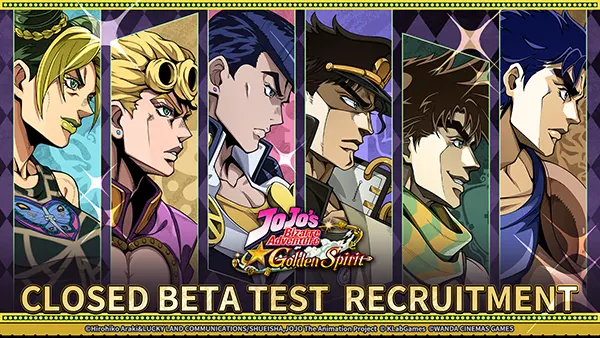
Team building is where the combat and Stand systems meet. Because characters come from several generations, players can assemble combinations that never appeared in the original story, but an effective group still needs a reason to exist. A practical team might pair a dependable front-line fighter with characters who can attack from different ranges and provide useful situational effects. Another squad may be built around a particular counter or environmental advantage. This makes collecting characters more meaningful when each new unit offers a different answer to a battle problem. The strongest choice on paper may not always be the most useful choice for a specific stage. Golden Spirit’s design encourages players to look at what a character does, whom that character works with and which enemy rules need to be answered.
Progression gives players several ways to strengthen those choices. The international game description lists Stand awakening, skill enhancement, equipment forging and character ascension among its development systems. These are familiar ideas for a mobile RPG, but they matter because they can improve characters without changing the basic identity of their abilities. A useful counter should remain a useful counter after progression; upgrades mainly make the character more capable of performing that role against tougher opponents. It is sensible to invest in a core group first rather than raising every acquired unit equally, but the environmental and matchup systems also give players a reason to keep alternatives available. A broader roster can provide answers when a stage punishes the habits of a single favourite team.
Golden Spirit is also designed for more than story stages. Official international information lists anime-based story content, World Boss battles and ranked player-versus-player competition. These modes can put different pressure on the same roster. Story battles can emphasise specific enemies and thematic conditions, a boss encounter may reward sustained team performance, and competitive play naturally places more importance on anticipating another player’s line-up. The underlying mechanics remain understandable because the same questions apply: what range does the team cover, which abilities interact well, what can counter the opponent and does the environment change the value of a particular character? Players who learn those principles in story content should have a clearer basis for adjusting their squad when they move into more demanding modes.
As of 10 August 2026, Golden Spirit remains a pre-release title in international stores, with 13 August shown as the expected iOS release date. KLab has stated that the game is being prepared for worldwide distribution outside Japan, and pre-registration began in May 2026. That timing matters when evaluating guides and tier lists. The combat framework is well documented, but the final public balance cannot be treated as settled before players have access to the launch build. Early advice should therefore focus on stable ideas such as ability counters, attack range, Rush, weather and team synergy rather than claiming that one character will remain dominant for months.
For players who know JoJo mainly from the anime, the combat system should be approachable because many rules follow familiar character logic. Ripple is effective where it makes sense against undead opponents; weather can strengthen or restrain abilities associated with temperature, water or visibility; individual quirks can appear as special battle effects. The strategic format also reduces the need for demanding action controls. The key skill is reading what is happening and selecting characters whose abilities answer the situation. Players who do not know every Stand in advance can still learn these relationships gradually through skill descriptions and repeated encounters, while long-time fans gain an extra advantage from recognising why a particular mechanic behaves as it does.
Golden Spirit’s most distinctive idea is not simply putting famous Stands on a phone screen. Its combat design tries to preserve the series’ pattern of observation, counterplay and sudden reversals inside a structured RPG battle. Rush creates a comeback opportunity, attack ranges affect how characters engage, environmental conditions can rewrite a matchup, and Stand abilities give individual units specific rules to work around. Progression remains part of the experience, but it sits alongside tactical choices rather than replacing them entirely. If the launch version maintains the direction shown in official 2026 material, the game should offer a relatively accessible form of strategy: enough character-specific detail to reward JoJo knowledge, but not so much technical complexity that every fight requires checking a spreadsheet.